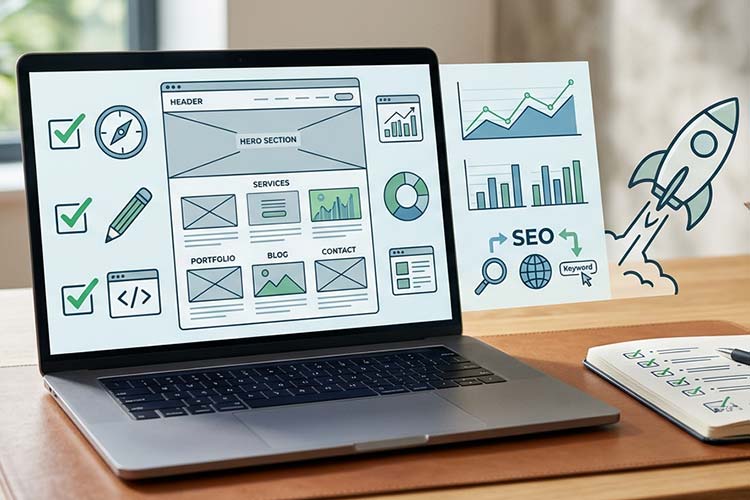
Google Ads can buy clicks but they can’t fix a website that isn’t built to convert.
If you’ve read a few articles on Jollyfox, you’ve probably noticed a recurring theme.
I’m a strong advocate for organic SEO.
Not because I think every business should avoid paid advertising, but because I’ve spent years building websites and I’ve seen what delivers the best long-term results.
The businesses that grow steadily aren’t always the ones with the biggest advertising budgets. They’re the ones with websites that genuinely deserve to be found—fast, informative, easy to use, and built around the questions their customers are actually asking.
Curiously, I see businesses investing heavily in Google Ads before they’ve invested in their own website.
Google Ads can absolutely generate enquiries, and in many cases I recommend them. But after reviewing websites over the years, I’ve come to the same conclusion again and again:
Most businesses don't have a traffic problem. They have a website problem.
More Visitors Won’t Fix the Wrong Problems
Imagine you own a shop.
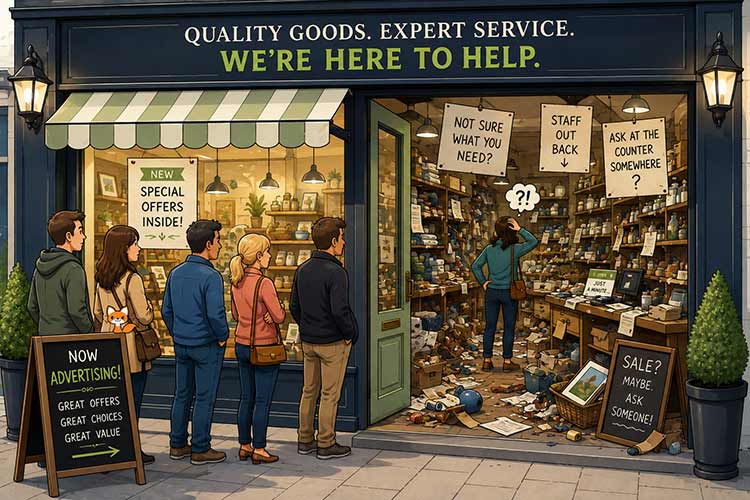
The windows are dirty. The signs are confusing. Customers struggle to find what they’re looking for. The checkout isn’t obvious.
Would spending more money on advertising solve those problems? Of course not.
You’d simply bring more people into a poor experience.
Your website works in exactly the same way.
Google Ads can increase the number of people visiting your website, but they can't make that website easier to use.
- They won’t improve your content.
- They won’t build trust.
- They won’t make your contact forms simpler.
- They won’t explain your services more clearly.
- That’s your website’s job.
The Foundations Come First
Before discussing Google Ads with any client, I ask a few simple questions.
- Does your website clearly explain what you do?
- Can someone landing on your homepage understand your business within a few seconds?
- Or do they have to search around trying to work out whether you’re the right fit?
Does every page have a purpose?
Too many websites have pages simply because every website is expected to have them.
Instead, every page should answer a question, solve a problem or help move a visitor one step closer to making an enquiry.
Does your website build trust?
Before someone contacts you, they’re asking themselves questions.
- Can I trust this business?
- Have they done this before?
- Are they local?
- Do they look professional?
Testimonials, case studies, recent projects, reviews and clear contact information all help answer those questions before you ever speak to a customer.
Is your website technically sound?
A few visitors may never notice technical SEO. However, most do and Google certainly does.
A well-built website should be:
- Fast to load
- Mobile friendly
- Secure
- Easy to navigate
- Properly structured for search engines
These aren't novel, exciting features. They're the foundations that everything else is built upon.
SEO Isn’t Something You Add Later
A common misconception I come across is that SEO is something you do after your website has been built.
- Perhaps you install a plugin.
- Write a few keywords.
- Tick a few boxes.
- Job done.
That's never been my approach. That is not professional SEO.
Good SEO influences almost every decision made during the design and development of a website.
- How pages are organised.
- How information is presented.
- How quickly pages load.
- How visitors navigate the site.
- What questions are answered.
- How different pages support each other.
SEO isn't something you bolt onto a finished website. It's part of the foundation and ongoing maintenance.
Why Ongoing Website Care Matters
This is another reason I’m such a believer in organic SEO.
It’s never really finished.
- Google changes.
- Your competitors improve.
- Customer expectations evolve.
- New questions are being searched every day.
The businesses that continue to perform well in search results aren’t usually making huge changes every few months.
They’re making small, consistent improvements over time.
- Publishing helpful content.
- Updating existing pages.
- Improving performance and security.
- Adding new services.
- Answering new customer questions.
Those improvements might seem small on their own, but together they create a website that becomes increasingly valuable—for both visitors and search engines.
Google Ads Still Have Their Place
None of this means Google Ads are a bad investment. Far from it.
When a business has a strong website, clear messaging and carefully designed landing pages, Google Ads can produce excellent results.
In fact, I often recommend them. But I recommend them after the foundations are in place.
Because every euro spent on advertising works much harder when visitors arrive on a website that’s genuinely ready to convert them into customers.
Advertising should amplify a strong website—not compensate for a weak one.
The Businesses That Win Think Long-Term
SEO isn’t the fastest way to generate enquiries.
- It takes patience.
- It takes consistency.
- It takes ongoing care.
- It prepares for technological changes.
But unlike paid advertising, you’re building something that continues to work long after the initial investment.
- Every useful article you publish.
- Every service page you improve.
- Every technical optimisation.
- Every internal link.
- Every customer review.
- Every question you answer.
They all become part of an asset that grows stronger over time.
Google Ads stop working the moment you stop paying.
A well-optimised website continues working for your business every single day.
It’s Not SEO or PPC
A common mistake in digital marketing is that you have to choose between organic SEO and Google Ads.
You don’t. The strongest online marketing strategies usually combine both.
Organic SEO builds authority, trust and long-term visibility. Organic, well maintained SEO can thrive over time without Google Ads.
Google Ads provide immediate exposure for the searches that matter most to your business. (Ideally, used when your SEO is on point)
Used together, they're incredibly powerful. But if your website isn't ready, paid advertising simply sends more people to experience the same problems.
Final Thoughts
After more than two decades building websites, one belief has only become stronger.
You can't advertise your way around a poor website.
Before increasing your advertising budget, it’s worth asking a different question.
“Does my website deserve more visitors?”
- If the answer is yes, Google Ads can be an excellent way to accelerate growth.
- If the answer is no, improving your website will almost always deliver a better return on investment.
At Jollyfox, I don’t see SEO as a checklist or a one-off service. I see it as a way of building better websites—websites that are useful, technically sound, easy to navigate and genuinely helpful to the people who visit them.
Because when you build a website that deserves to be found, search engines tend to agree. The best-performing websites don't chase Google. They help people so well that Google chooses to recommend them.
Related Reading
If you’re planning to invest in your online presence, you might also find these articles useful:
Are Google Ads Worth the Investment for Small Businesses? – Learn when paid advertising makes sense and what you should expect from your investment.
Why SEO Should Come Before PPC – Discover why building strong organic visibility often provides better long-term value before investing heavily in paid advertising.
Why Your Google Ads Need a Dedicated Landing Page – Find out why sending paid traffic to your homepage could be costing you valuable enquiries.