If you’re a small business owner, you’ve probably wondered whether Google Ads are worth the investment.
After all, Google promises to put your business in front of people who are actively searching for your products or services. It sounds like an easy win.
But here’s the reality: Google Ads can be one of the best investments you make—or one of the quickest ways to burn through your marketing budget.
The difference isn't Google Ads. It's whether your business is ready for them.
I’ve talked with businesses that have spent hundreds or even thousands of euros on Google Ads without seeing the results they expected. In most cases, Google Ads weren’t the problem. Upon reviewing their business website, the problem was that the foundations weren’t in place.
Before deciding whether to invest in PPC, it’s worth understanding when Google Ads genuinely make sense—and when your money is better spent elsewhere.
The Short Answer
Yes, Google Ads can absolutely be worth the investment.
But only if your website is capable of turning visitors into customers.
Google Ads don’t fix a poor website, unclear messaging or a weak online presence. They simply send more people to what you already have.
Think of it this way:
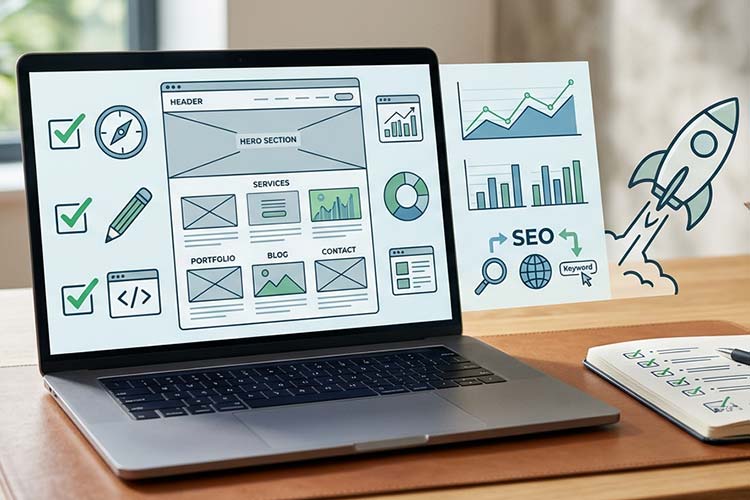
SEO builds the foundations. Google Ads accelerate the results.
When Google Ads Are Worth the Investment
Google Ads work best when your business is already positioned to convert visitors into enquiries or sales.
1. You Need Leads Quickly
One of the biggest advantages of Google Ads is speed.
Unlike SEO, which can take several months to build momentum, Google Ads can put your business at the top of Google’s search results within days.
If you’re launching a new service, promoting a seasonal offer or looking to generate enquiries quickly, PPC can provide immediate visibility while your long-term SEO strategy continues to grow.
2. Your Website Already Converts Visitors
This is perhaps the most important factor.
Ask yourself:
- Is it immediately clear what you do?
- Is your website fast and mobile-friendly?
- Can visitors easily contact you?
- Do you have genuine customer reviews?
- Is there a clear call to action on every page?
If the answer is yes, Google Ads can become a powerful way to increase enquiries.
If the answer is no, paying for additional traffic simply means paying for more people to leave your website.
3. You Know What a Customer Is Worth
Successful advertising is based on numbers, not guesswork.
For example, if you spend €50 generating a lead that becomes a €2,000 customer, your advertising is clearly worthwhile.
If that same lead only produces a €50 sale, the math as they say, is not mathing. The worth changes dramatically.
Knowing the average value of a customer makes it much easier to judge whether your campaigns are profitable.
4. You Can Measure Results
One of the biggest advantages of digital marketing is that almost everything can be measured.
Before spending money on Google Ads, you should know:
- How many enquiries your website receives.
- Which keywords generate those enquiries.
- How much each lead costs.
- Which campaigns generate actual customers.
Without proper conversion tracking, you're relying on assumptions rather than data.
When Google Ads Probably Aren’t Worth It
Google Ads aren’t always the right investment.
In fact, there are several situations where I’d recommend improving your website before spending money on PPC.
1. Your Website Needs Work
Many businesses assume that if they aren’t getting enough enquiries, they simply need more visitors.
That’s rarely the real problem.
If your website is slow, difficult to navigate or doesn’t clearly explain why someone should choose you, Google Ads won’t solve those issues.
Advertising amplifies your website.
If your website isn't converting visitors today, paying for more traffic usually just increases your marketing costs.
2. You Haven’t Invested in SEO Yet
One of the most common mistakes I see is businesses relying entirely on paid advertising while overlooking their organic search presence.
SEO helps your website become more visible in Google’s unpaid search results, bringing in consistent traffic without paying for every click.
That’s why I generally recommend building your SEO foundations before investing heavily in PPC.
If you’d like to explore this in more detail, I’ve written a dedicated guide explaining why SEO should come before PPC
Once those foundations are in place, Google Ads become much more effective because you’re driving paid traffic to a website that’s already designed to convert visitors into customers.
3. Your Budget Is Too Small
Many business owners assume they can spend €200 or €300 and dominate Google.
Unfortunately, that’s rarely how PPC works.
Competitive industries often have high cost-per-click rates, meaning a small budget disappears quickly.
That doesn’t mean you need thousands of euros to advertise successfully.
It means your campaigns need to be tightly focused on the right keywords, the right locations and the services most likely to generate profitable enquiries.
4. You Don’t Have Time to Manage Campaigns
Google Ads aren’t something you set up once and forget.
Successful campaigns require regular optimisation, including:
- Reviewing search terms.
- Testing new adverts.
- Refining keywords.
- Improving landing pages.
- Adjusting bids.
- Monitoring conversions.
Without ongoing management, campaign performance often declines over time.
The Hidden Costs of Google Ads
When people think about Google Ads, they usually focus on the advertising budget.
In reality, that’s only one part of the investment.
You also need to consider:
- Keyword research.
- Campaign setup.
- Landing page creation.
- Conversion tracking.
- Ongoing optimisation.
- Reporting and analysis.
Businesses that see the strongest return from Google Ads understand that they're investing in an ongoing marketing strategy—not simply buying clicks.
SEO and Google Ads Work Best Together
A common misconception is that you have to choose between SEO and Google Ads.
In reality, they complement each other.
SEO builds authority, improves your visibility in organic search and creates a steady stream of visitors over time.
Google Ads provide immediate visibility for the keywords that matter most to your business.
In my experience, the strongest marketing strategies don’t rely entirely on one or the other.
Instead, they usually follow a simple path:
- Build a fast, professional website.
- Invest in SEO to improve your organic visibility.
- Create useful content that answers your customers’ questions.
- Use Google Ads strategically to generate additional enquiries when the foundations are in place.
Rather than paying for every visitor forever, you’re building a website that becomes a valuable business asset year after year.
A Quick Checklist Before You Invest
- Before launching Google Ads, ask yourself:
- Is my website professional and easy to use?
- Does it clearly explain what I offer?
- Can visitors easily contact me?
- Do I have positive customer reviews?
- Can I measure enquiries and conversions?
- Do I know what a new customer is worth?
- Have I already invested in improving my SEO?
If you've answered "No" to several of these questions, your marketing budget will probably achieve a better return by improving your website first.
In Closing
Google Ads can be an excellent investment—but only when your business is ready for them.
A well-designed website, strong SEO, clear messaging and accurate conversion tracking all make paid advertising far more effective.
For most small businesses, the smartest approach isn’t choosing between SEO and Google Ads. It’s knowing when to use each.
Build the foundations first. Invest in SEO to create long-term visibility. Then use Google Ads strategically to accelerate your growth.
If you’re unsure whether your business is ready for PPC, I’d be happy to review your website and give you honest, practical advice. Sometimes Google Ads are the right next step. Sometimes your money is better invested in improving your website and SEO first.
The goal isn't simply to spend money on advertising—it's to invest it wisely.